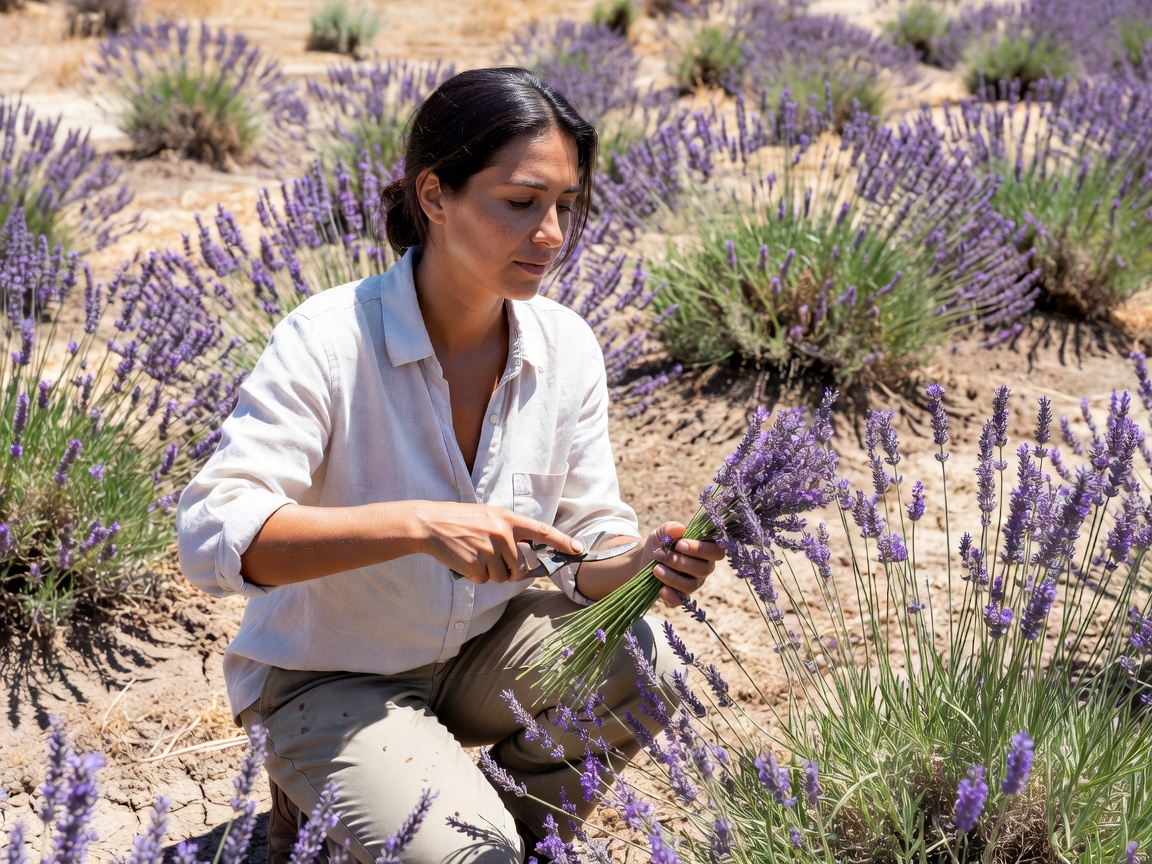
 Hot & dry
Lavender & catmint
Mediterranean toughness for free-draining sun.
The easiest garden is one where plants are chosen for the soil and sun you already have. These are the perennials that rarely need a hose after year one.
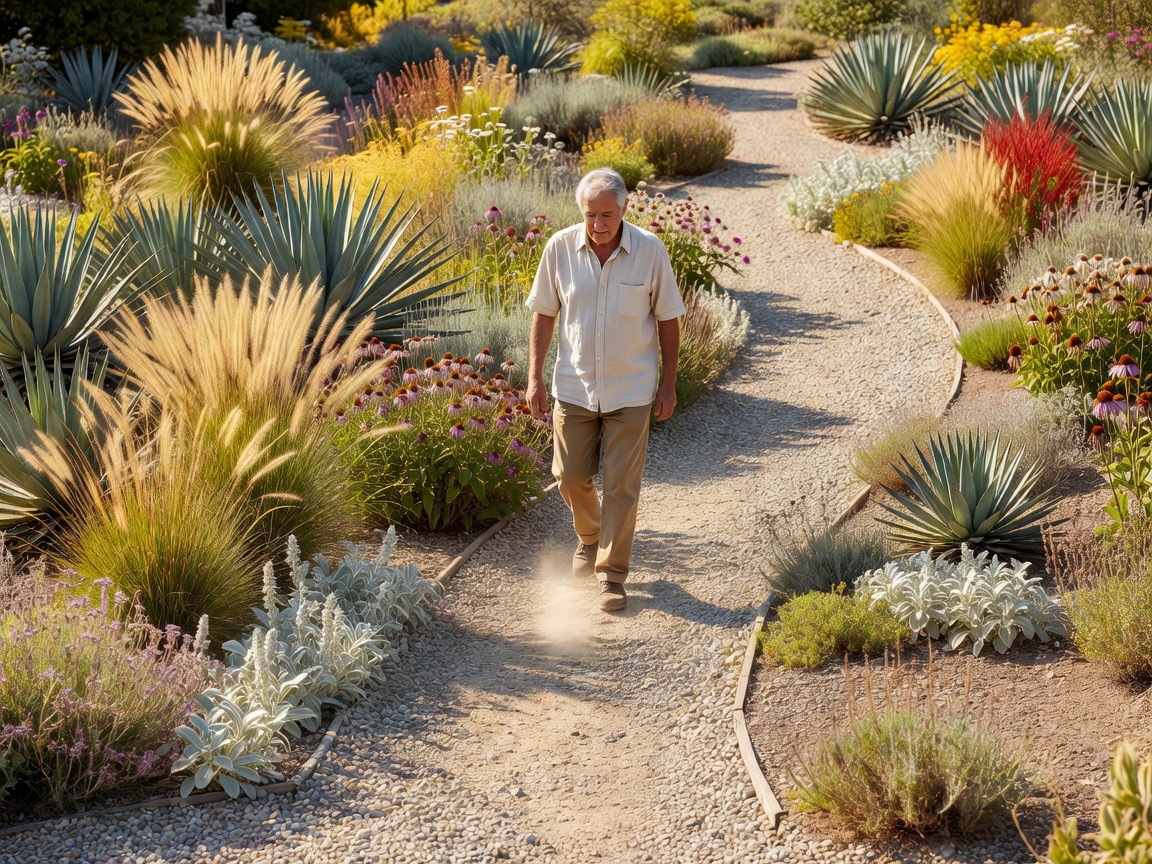 Hot & dry
Mediterranean toughness for free-draining sun.
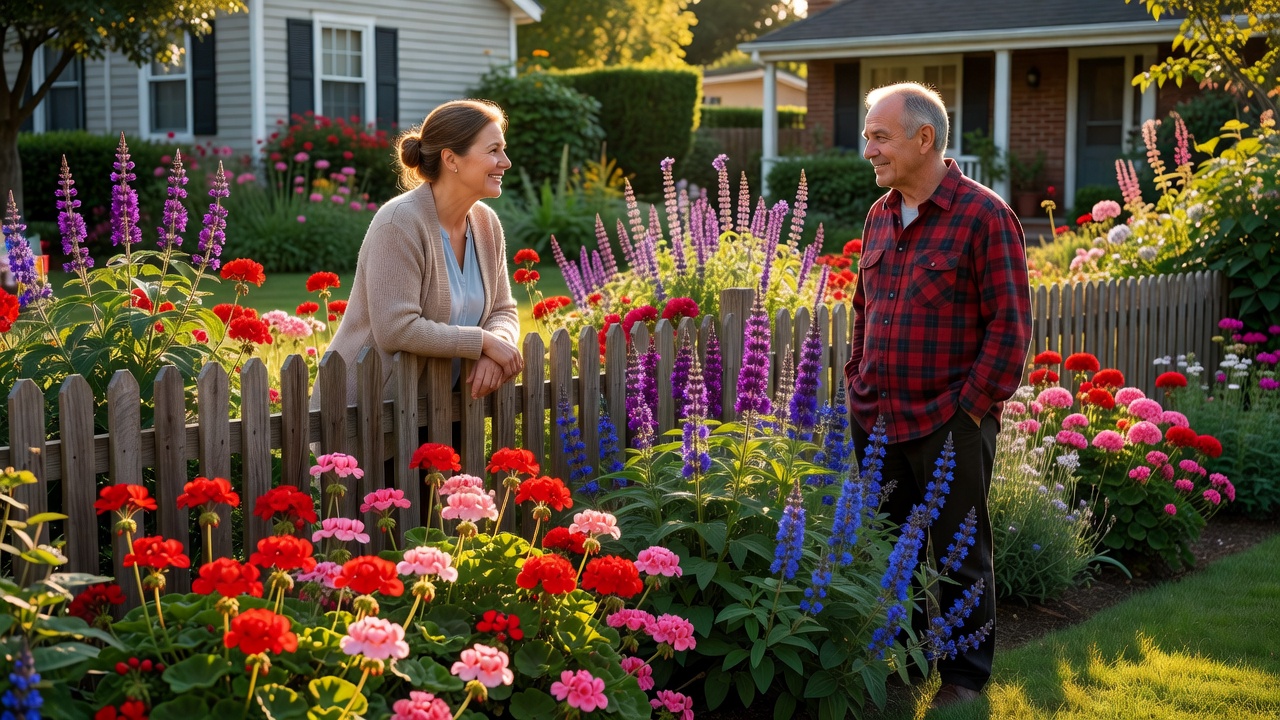 Long flowering
Flowers from early summer to the first frosts with almost no deadheading.
No garden is maintenance-free, but some ask for an afternoon a month rather than an evening a week. The plants here share four traits: they hold their shape without staking, they need no regular deadheading to keep flowering, they are not routinely flattened by slugs, and once established they survive a normal dry summer without irrigation. Many carry the RHS Award of Garden Merit, which is given only after trials show reliable performance in ordinary garden conditions.
The most persuasive evidence for drought-tolerant planting is in Essex. In 1991 the plantswoman Beth Chatto turned a former car park at Elmstead Market into her Gravel Garden, on thin soil in one of England's driest regions, and resolved never to water it. More than three decades later it still thrives. In the United States, Denver Water coined the term “xeriscape” in 1981 to promote water-wise landscaping in the semi-arid West. The principle is the same on both continents: match plants to conditions and the sprinkler becomes optional.
Drought tolerance is earned, not bought. A plant fresh from the nursery has its roots confined to a small pot of compost and will wilt in a dry spell like any other. Plant in autumn or early spring when the soil is moist, water deeply once a week through the first summer, and then stop. Deep, infrequent watering pushes roots downward; little daily sprinkles keep them lazy and near the surface. A 5 cm mulch of gravel or bark reduces evaporation and suppresses weeds.
Most Mediterranean plants fail in heavy clay because their roots sit in cold, wet soil all winter, not because summers are too dry. If you garden on clay, either raise beds, dig in grit, or choose clay-tolerant toughies like Geranium ‘Rozanne’, Achillea and asters instead of lavender. On sandy or chalky soil, the full list above will be at home with almost no help.
A border of forty different plants, one of each, needs constant decisions. A border of six species planted in repeating groups of five to nine looks calmer, is easier to weed because you learn what belongs, and reads as deliberate design. Chatto's garden and Piet Oudolf's naturalistic schemes both rely on repetition. Leave seedheads standing in autumn for birds and winter structure, then cut everything back in one session in late February.
| Plant | Sun | Soil | Flowers | Score |
|---|---|---|---|---|
| Nepeta ‘Six Hills Giant’ | Full sun | Any well-drained | May–Sep | 9.1 |
| Geranium ‘Rozanne’ | Sun–part shade | Most, incl. clay | Jun–Oct | 9.0 |
| Salvia ‘Caradonna’ | Full sun | Well-drained | Jun–Sep | 8.9 |
| Lavender ‘Hidcote’ | Full sun | Sharp drainage | Jun–Aug | 8.7 |
| Sedum ‘Herbstfreude’ | Full sun | Dry, poor | Aug–Oct | 8.6 |
| Eryngium | Full sun | Dry, poor | Jul–Sep | 8.3 |
| Achillea | Full sun | Most | Jun–Sep | 8.1 |
| Stipa tenuissima | Full sun | Well-drained | Jun–Nov | 7.6 |